Wellbeing / Mana Atua
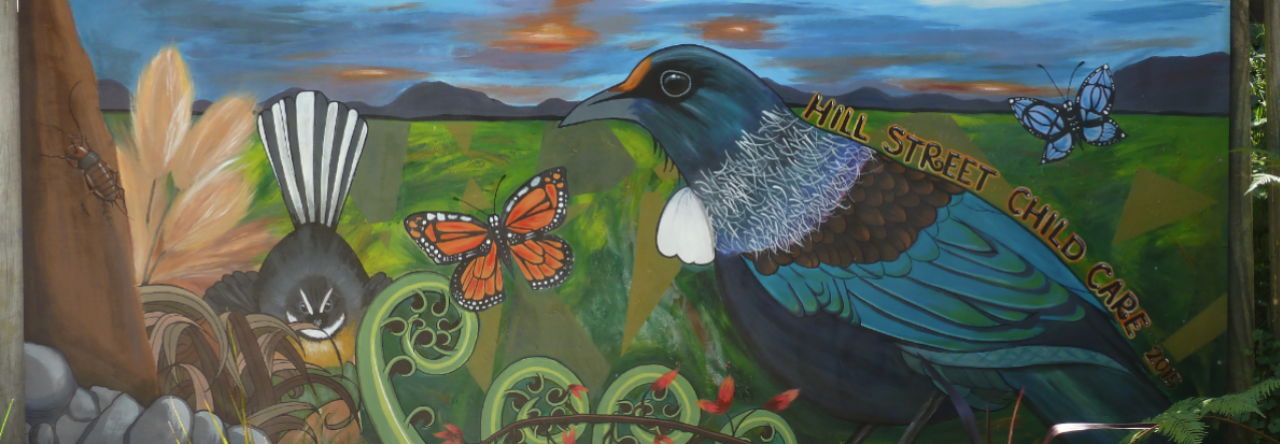
At Hill Street we have a strong kaupapa that is built on a treaty that has been formed with children to explain the rights and responsibilities they have when participating in the programme here at Hill Street. These five key values guide the way tamariki work together. First of all, Tino rangatiratanga is viewed as children taking growing responsibility for themselves and others, we encourage children to take care of their own wellbeing – learning to be confident in dressing themselves, managing and expressing their feelings, pursuing learning. Kaitiakitanga, we are thoughtful and care for the environment and others around us to keep everyone safe and well. Tamariki help with gardening, growing veges and taking care of all creatures at Hill Street – being curious about and respectful toward insects, feeding the local birdlife (Maui the Tui, Kaka, sparrows, piwakawaka). Kotahitanga, we work together as a collective. We do this as peacefully and cooperatively as we can, understanding that our actions can impact on others feelings. Manaakitanga, we look after each other and show support of each other. The play space kaupapa is inclusive and positive. Pārekareka is enjoying all that you do. We want to turn children on to learning, enjoy what they do and be self-motivated learners.
Our policies and routines through the day encourage children to maintain a healthy mind, body and spirit. We consider getting outside and enjoying the great outdoors to make connections to Papatūānuku and our local environment very important, particularly the connections to our landmarks of our Centre Pepeha: our awa, (Pipatea stream), our Maunga (Te Ahumairangi) and our Moana (Te Whanganui a Tara).
Te Ao Maori values that are upheld under this strand: Tinorangatiratanga Kotahitanga, kaitiakitanga, Manaakitanga, Nga hononga, parekareka
Belonging / Mana Whenua
We believe that a child’s sense of belonging is more secure when their whanau are involved in their learning. Strong trusting relationships with whanau are very important to us. Induction is a time when we get to know whanau well, we find out about tamariki whakapapa and what aspirations, values and what makes their family unique. We provide whānau with a survey to complete about their whakapapa to inform usof where they come from and what traits and gifts have been handed down through generations.
All tamariki are acknowledged as competent and capable, rich with skills knowledges and abilities, often been passed down to them through generations of whanau before them. Our culturally responsive teaching affirms and builds on these capabilities acknowledging the child as a unique individual with their own culture and languages and abilities. Our stories of learning progressions for each individual celebrate their unique ways of learning, acknowledging languages and culture.
We value and celebrate children’s home languages, incorporating them both visually and spoken into our daily centre life. Kaiako actively seek to enhance their understanding of tamariki’s home languages, taking the time to speak with whānau in order to ensure that language is incorporated appropriately and authentically.
We support tamariki to understand that diversity should be celebrated. We honour both parties to Te Tiriti o Waitangi. We think it is important for all our children to have opportunities to hear, understand and learn te reo me ngā tikanga Māori (Māori language and culture).
We have whanau wawata meetings regularly to support kaiako with the assessment processes for each individual child to reflect parent aspirations for their tamariki. We recognise the importance of whānau participation in curriculum decision making and actively listen to the aspirations of whānau through conversation and discussion.
We support a sense of belonging to our wider environment, including encouraging making links between people, places, time, and things. We acknowledge that we are kaitiaki of our environment, belonging to something bigger than ourselves. This encompasses caring for Papatūānuku (such as gardening and composting) as well as he tangata (looking out for others and showing care and respect).
We encourage children to make connections to places in our Centre Pepeha, regular trips are made to Te Ahumairangi Maunga, Pipatea Stream, our awa and Te Whanganui a tara harbour.
When tamariki are leaving they work alongside a kaiako in creating a Kākahu; choosing certain beads or materials from home to add to their meaningful creation.
They will then wear this on their last day as all the tamariki, kaiako and their whānau gather to say goodbye.
Te Ao Maori values that are upheld under this strand upheld with this strand: Manaakitanga, Nga hongonga, Whanautangata
Contribution / Mana Tangata
We ensure that the mana of the child is always protected and enhanced in the way we have interactions with children. We ensure tamariki feel listened to and valued for what they have to offer, we value their point of views and ideas. We ensure non biased language and ideas are used to support all tamariki to feel included .
We build a strong sense of community amongst the tamariki and their whanau. We uphold the whakataukī Ehara tāku toa i te toa takitahi, engari takimano, nō āku tīpuna) – (My strength is not individual it is collective). We identify strengths and utilise these to benefit the wider group. Tamariki curiosities and interest guide the way we set up our learning environments and direction our program takes. Ako is central to our practice, with tamariki and kaiako learning from and alongside each other.
We support strong tuakana-teina relationships through our kaupapa that encourages tamariki to go to an older peer to ask for help or advice before coming to a kaiako. There is an expectation that tuakana take responsibility for their role as mentors and guides in learning and help wherever they can. This helps to foster strong relationships with different age groups and encourages tamariki to learn alongside others.
Our older tamariki are all given opportunities to visit our pēpi downstairs and spend time building on those relationships.
When the pēpi are ready to transition upstairs, part of our transition is that one of the older tamariki are assigned to the child transitioning. They will show them how the kaupapa is upheld upstairs and help them play and integrate into their new environment.
When we go on excursions that involve both age groups or just the tamariki from upstairs, we pair older tamariki up with a younger one to foster tuakana-teina relationships and give the older tamariki an opportunity to take responsibility, encouraging them to learn from one another.
Te Ao Maori values that are upheld under this strand: Mana, Whanaungatanga
Communication / Mana Reo
We understand that all behaviour is a form of communication and work together to ensure that tamariki feel safe to be able to express themselves and learn how to communicate positively, verbally, and non-verbally. We provide opportunities to see and hear language in everyday activities such as one on one conversation, waiata, mahi toi, imaginative play and storytelling. Tamariki are encouraged to explore different ways of expressing themselves. Kaiako respect and encourage the use of home languages. We have appreciation of te reo Māori as a living and relevant language and integrate this into all that we do.
We also value the use of NZ sign language and support tamariki to be able to express their thoughts and ideas non verbally as well.
We also place importance of the arts to support the development of the mind, body and spirit with a strong arts and music programme.
In order to foster early literacy and an understanding that print has meaning and conveys a message, literacy is a part of our permanent programme- each day there is an activity or experience that supports early literacy. For our older tamariki, we run a phonics focused programme weekly during Tui Hui which helps build a strong literacy and numeracy foundation for school.
Te Ao Maori values that are upheld under this strand: Manaakitanga, Whanaungatangata, Auahatanga, Mohiotanga, Rangatiratanga
Exploration / Mana Aoturoa
We have the privilege of being in Central Wellington, with close proximity to many wonderful historical sights and places of interest. We have a place-based curriculum, which means we utilise these places to support the deeper learning for our tamariki. We highly value tamariki knowing where they are from and regularly go out on excursions to hikoi around our local area to explore.
Once a week we go for a hikoi to visit our Maunga, Te Ahumairangi. In this space, we encourage tamariki to challenge themselves physically and to push themselves out of their comfort zones, walking up steep hills and climbing trees. We use these excursions as opportunities to support deepening our understandings of what it is to be kaitiaki and we have a specific waiata and karakia that we perform when we enter this sacred space.
Sustainability and looking after our natural environment are practices that are woven into our daily routine. As they progress through our centre, tamariki are given responsibilities to take part in caring for our space and environment. Some of these include helping with gardening, assisting in compost disposal and maintenance, preparing, making, and serving kai.
We place an importance on developing children’s scientific understanding by encouraging natural curiosity. We support children to problem solve and come up with their own working theories, not necessarily giving them the “right” answer. We allow children to develop understandings of how they are learning and support them to recognise their own capabilities. In our over two space we have a question box that we use to explore our curiosities and once a week we use these questions as provocations to investigate our working theories.
Te Ao Maori values that are upheld under this strand: Kaitiakitanga, Mana, Rangatiratanga
 Hill Street Early Childhood Centre